
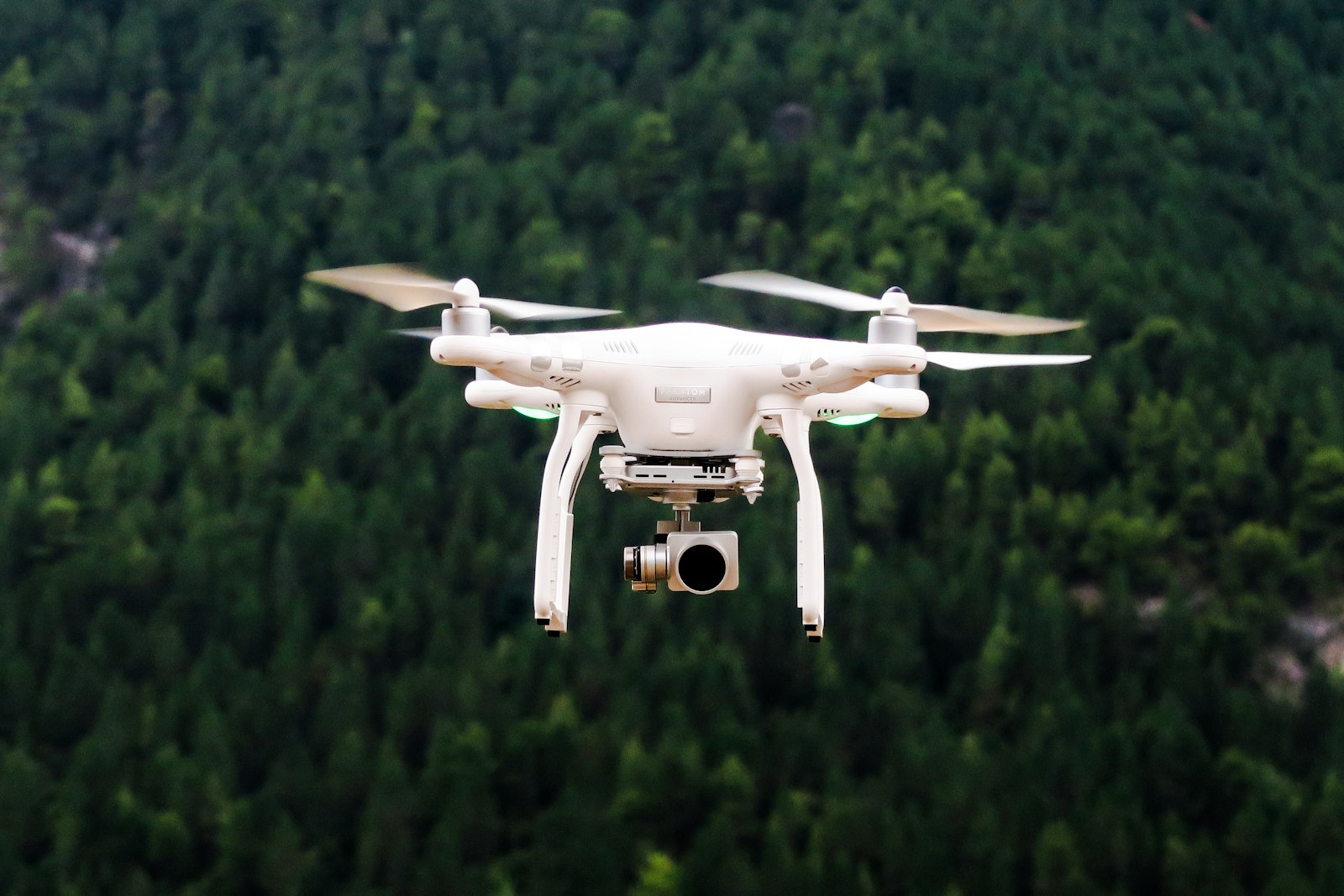
If you've spent any time around drones, you've probably heard the term "Part 107" thrown around. Maybe a fellow photographer mentioned they got theirs, or a client asked if you're "licensed." It can sound intimidating, but it doesn't have to be.
This post breaks down — in plain English — what a Part 107 license is, what it lets you do, and why it matters if you're flying a drone for anything beyond a hobby.
But first, here's a quick look at what a certificated pilot can capture. This is real footage from our own flights here at Lookout Visuals:
<iframe width="100%" height="500" src="https://lookoutvisuals.com/footage" title="Lookout Visuals Drone Footage Library" frameborder="0" allow="autoplay; fullscreen" allowfullscreen></iframe>Chattanooga's riverfront, bridges, and ridgelines — captured by our own Part 107-certified pilots. Browse our full footage library for more.
What Is a Part 107 License, Exactly?
"Part 107" refers to the section of the Federal Aviation Regulations (14 CFR Part 107) that governs commercial drone flights in the United States. When someone says they have their "Part 107 license" or "drone license," what they really have is a Remote Pilot Certificate issued by the FAA.
In simple terms: if you're flying a drone for work or business — getting paid, flying for a client, or otherwise operating in a commercial capacity — Part 107 is the rulebook you fly under, and the Remote Pilot Certificate is your proof that you know how to do it safely and legally.
Flying purely for fun? That falls under the recreational exception, which has its own (lighter) set of rules. But the moment money changes hands — even bartered services — you're in Part 107 territory.
What Are the Requirements to Get One?
Before you can earn a Remote Pilot Certificate, you need to meet a few baseline eligibility requirements set by the FAA:
- Be at least 16 years old
- Be able to read, speak, write, and understand English
- Be in a physical and mental condition safe for flying
Then comes the main event: passing the Unmanned Aircraft General (UAG) Knowledge Test — a 60-question, multiple-choice exam administered at an FAA-approved testing center. You need a score of 70% or higher to pass.
The test covers topics like:
- Airspace classifications and operating requirements
- Aviation weather sources and effects
- Drone loading and performance
- Emergency procedures
- Crew resource management
- Airport operations
- Maintenance and preflight inspection
- FAA regulations specific to Part 107
Once you pass, you'll receive a Temporary Remote Pilot Certificate (usually within a couple of weeks), and your permanent certificate follows in the mail.
Recurrent Training Keeps You Current
Your Remote Pilot Certificate doesn't expire, but your recency does. Every 24 months, you need to complete recurrent training to keep flying commercially. As of recent rule changes, this can be done online through the FAA Safety Team (FAASafety.gov) — no more trips to a testing center for the recurrent.
What a Part 107 License Lets You Do
Here's where it gets fun. Here's what being a certificated remote pilot unlocks:
1. Fly for Pay (Legally)
This is the big one. With a Part 107 certificate, you can legally accept compensation for drone work — real estate photography, roof inspections, construction progress tracking, wedding videography, agricultural mapping, you name it. Without it, you're limited to recreational flying only.
Want to see what professional drone work looks like in practice? Here's a look at our recent client projects:
<iframe width="100%" height="500" src="https://lookoutvisuals.com/work" title="Lookout Visuals Client Work" frameborder="0" allow="autoplay; fullscreen" allowfullscreen></iframe>Every shot — orbit reveals, tracking passes, overhead flat-lays — is a commercial operation that requires a Part 107 certificate. See more in our work portfolio, or explore our service packages to see what's included in a typical shoot.
2. Fly at Night
Since the FAA's Operations Over People rule went into effect on April 21, 2021, Part 107 pilots can fly at night without a waiver, provided your drone is equipped with anti-collision lighting visible for at least three statute miles. That opens up a whole world of creative possibilities — city lightscapes, evening events, twilight real estate shots.
We've put this to work ourselves. You'll find night and low-light aerial clips throughout our footage library — downtown skylines, twilight exteriors, and event coverage that simply wasn't possible for most pilots before the 2021 rule change.
3. Fly Over People and Moving Vehicles (With Conditions)
The same 2021 rule update also made it possible to fly over people and moving vehicles under Part 107 without a waiver — but it's tiered based on your drone's weight and design. Smaller, lower-risk drones have fewer restrictions, while heavier aircraft have more categories to meet before they can operate overhead.
4. Fly in Controlled Airspace (With Authorization)
Controlled airspace — the areas around airports where air traffic control manages manned aircraft — used to be a headache for drone pilots. Now, thanks to the Low Altitude Authorization and Notification Capability (LAANC) system, Part 107 pilots can request and receive near-instant airspace authorizations through approved apps. Chattanooga, for instance, sits under Class D airspace around Lovell Field (CHA), and LAANC makes it straightforward to get cleared for flights in and around the areas we serve.
5. Fly Drones Up to 55 Pounds
Part 107 covers small Unmanned Aircraft Systems (sUAS) weighing less than 55 pounds total — including payload. That covers the vast majority of drones used for professional photography and videography services, and inspection work. Need to fly something heavier? That's outside Part 107's scope and requires a different path entirely.
6. Apply for Waivers for Advanced Operations
Want to push beyond the standard Part 107 limits? The FAA offers a waiver process that allows certificated pilots to do things like:
- Fly Beyond Visual Line of Sight (BVLOS)
- Fly multiple drones simultaneously
- Operate from a moving vehicle (in sparsely populated areas)
- Fly higher than 400 feet over structures
Waivers require you to demonstrate that you can perform the operation safely, and approval times vary — but the pathway exists for pilots who want to take on more complex missions.
What a Part 107 License Does Not Automatically Let You Do
It's just as important to know the boundaries:
- Fly beyond visual line of sight (BVLOS) without a waiver — you must always be able to see your drone with your naked eye (or via a visual observer).
- Fly higher than 400 feet above ground level, unless you're within 400 feet of a structure and inspecting it.
- Fly recklessly — Part 107 doesn't give you a free pass. You must always yield the right of way to manned aircraft and avoid operating in a careless manner.
- Skip Temporary Flight Restrictions (TFRs) — TFRs can pop up at any time (for VIP visits, wildfire response, sporting events, etc.), and they take priority. Always check before you fly using the B4UFLY app or LAANC.
- Ignore state and local laws — Part 107 governs airspace, but local ordinances about privacy, trespassing, and takeoff/landing locations still apply.
Why It Matters for Your Business
If you're a real estate agent, contractor, wedding venue, or any small business owner in the Chattanooga area thinking about using drone content, here's the practical takeaway: hiring a Part 107-certified pilot protects you.
An uncertified pilot flying for pay is operating illegally — and if something goes wrong (property damage, injury, an FAA complaint), that liability can land squarely on the client's shoulders. A certificated pilot has invested the time to understand airspace, weather, emergency procedures, and regulations. They know where they can and can't fly, and they carry insurance designed for commercial drone work.
At Lookout Visuals, every flight we conduct — whether it's a real estate listing in Hixson, a construction site in Enterprise South, or aerial coverage of a downtown event — is flown under Part 107 by a certificated remote pilot. It's more than a legal box to check. It's a commitment to doing the job right. Still have questions? Check out our FAQ page for answers to common questions about drone services, turnaround times, and what to expect.
The Takeaway
A Part 107 license is your ticket to flying drones professionally in the United States. It proves you understand the rules of the sky, and it unlocks commercial work, night operations, controlled-airspace access, and more — all within a framework designed to keep the national airspace safe for everyone.
If you're considering getting yours, the best first step is to grab a study guide, familiarize yourself with the FAA's free resources at faa.gov/uas, and schedule your knowledge test at a local testing center.
And if you're a business owner who just needs great drone content without becoming a pilot yourself? That's exactly what we're here for.
Ready to put a certificated pilot to work on your next project? Request a free quote or schedule a call with Lookout Visuals — we'll handle the airspace, the regs, and the flying. You just tell us what you need to see.